
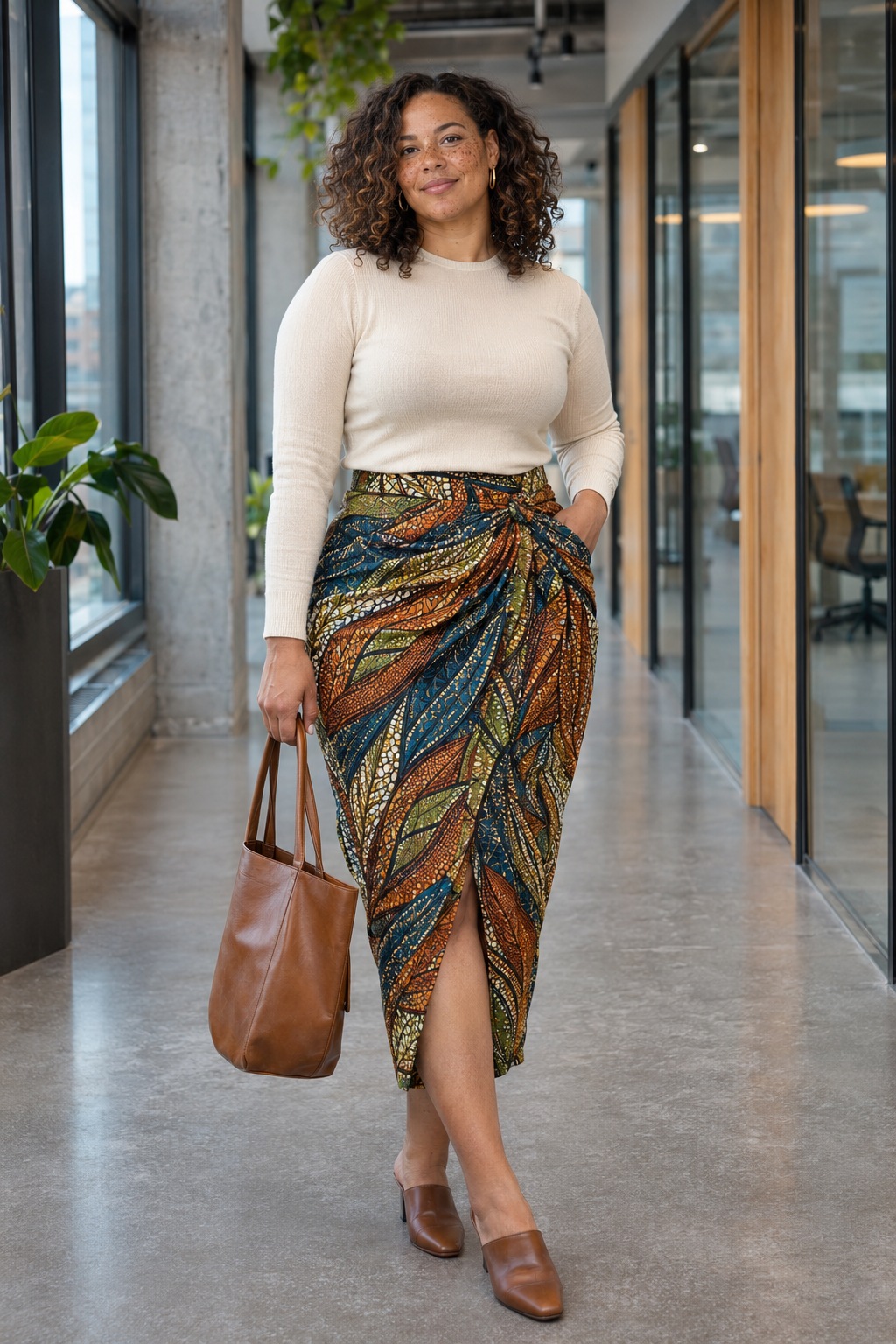
An earthy wrap skirt for the office. Cobalt tiers for a christening. A graphic maxi for a night out with friends. Three women, three skirts and three ideas you can borrow with what you already own.
1. At the office: the wrap skirt
The rust, teal and olive print does most of the work. A fitted cream top leaves the waistline visible without adding bulk; a brown bag and flat shoes finish it. If your skirt opens up when you sit, try the outfit seated before you leave. A hidden pin or a different cut can make the day easier.
2. With family: cobalt and tiers
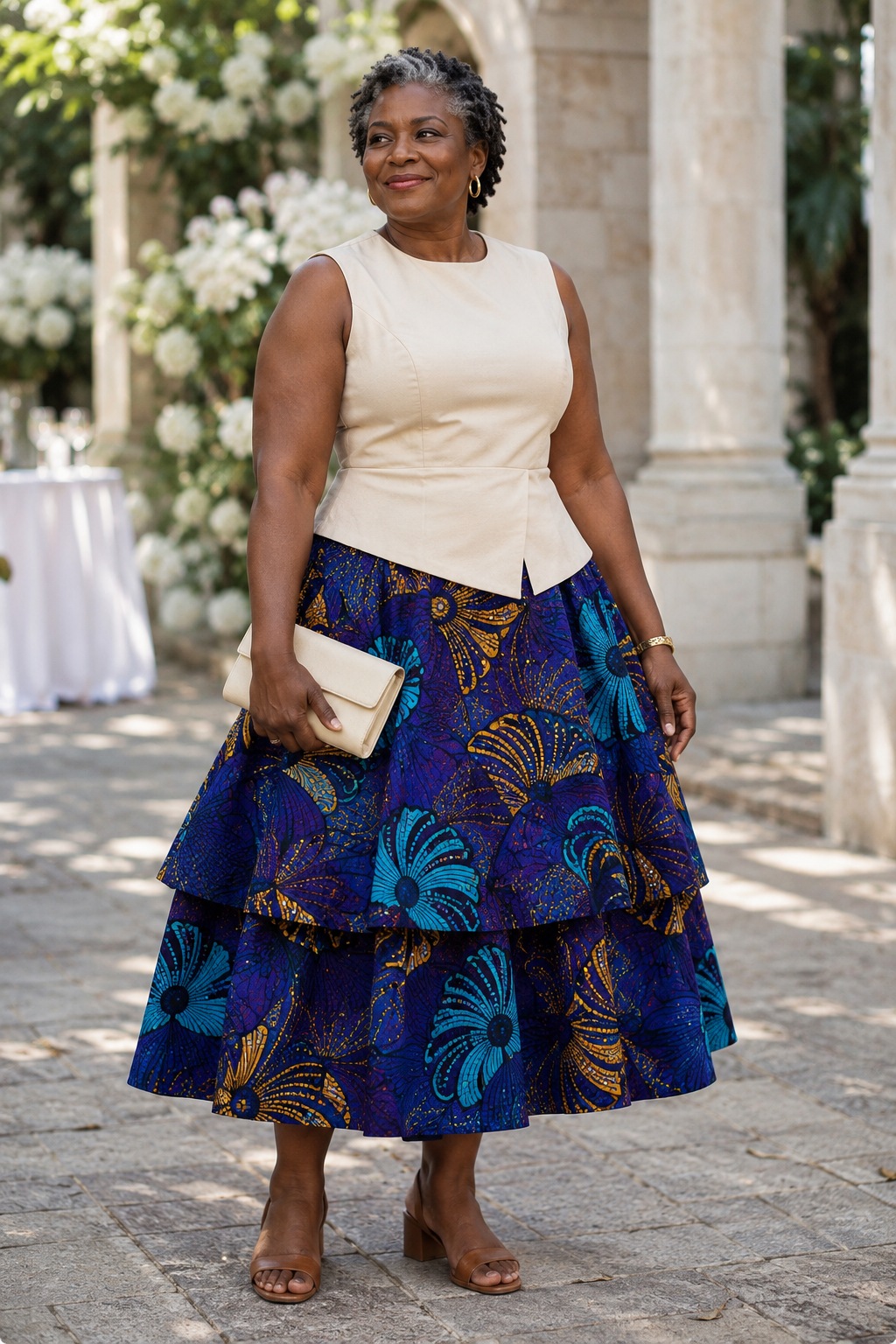
An ivory sleeveless top, a cream clutch and low heels let the blue stand out. The top ends at the waist, leaving room for the tiers to move. On grass, a wide heel or a pair of flat sandals can be more practical.
3. Going out: the black-and-ecru maxi
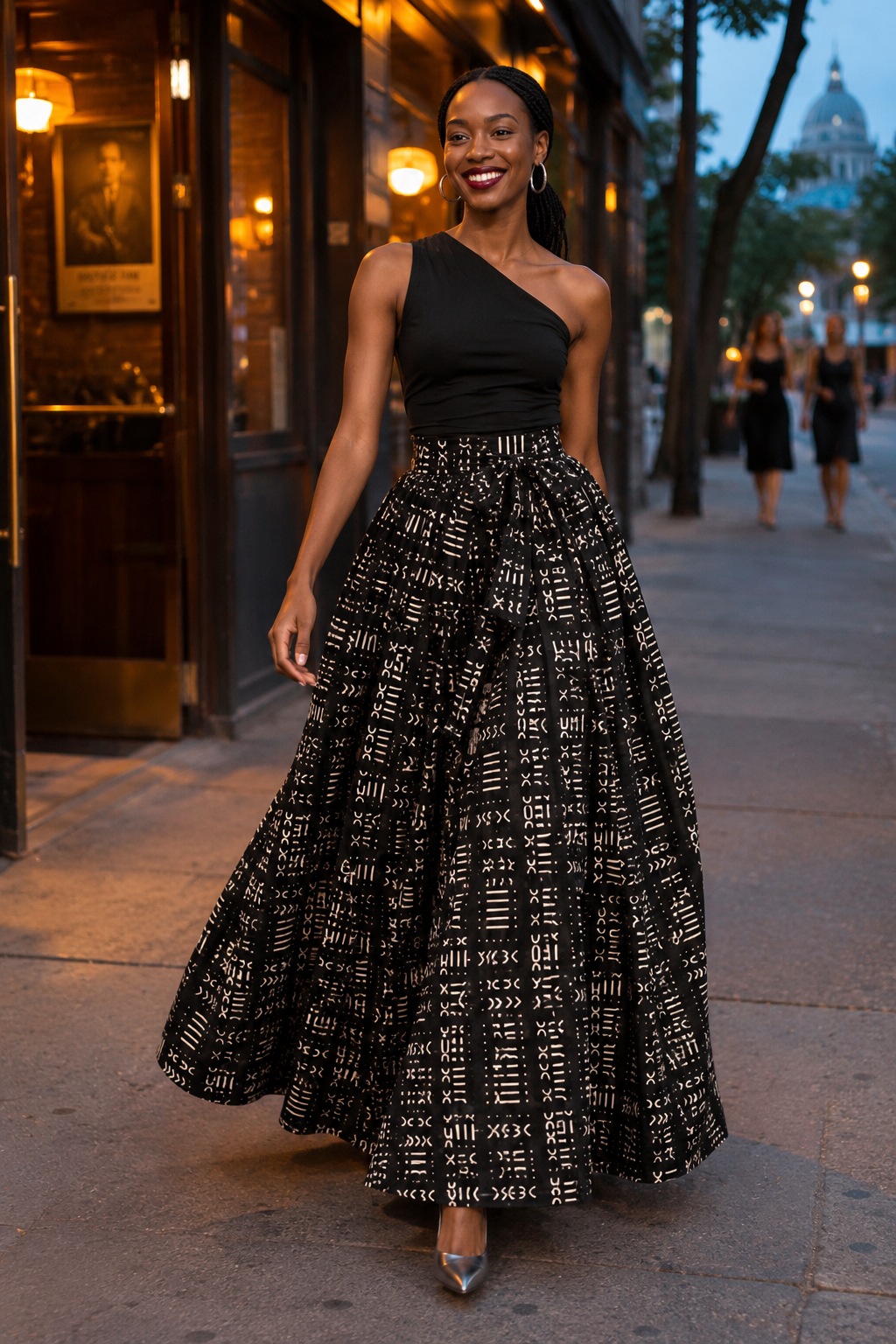
An asymmetric black top picks up the background of the print and lets the maxi take up space. Silver earrings catch the light. Put your shoes on before checking the hem: you want to be able to walk without holding your skirt up.
A fabric that travelled
Industrial wax print drew on Javanese batik, a dyeing process that uses wax to protect selected parts of the cloth. In the 19th century, Dutch manufacturers made mechanized versions of the technique. In West Africa, merchants and customers embraced these textiles and gave them names and meanings of their own. What a pattern means can still depend on where it’s worn and who wears it.
One of the designers making wax print part of everyday dressing is Maureen Ayité, the founder of Nanawax. Her interview with Irawo Talents, linked below, traces the brand’s beginnings. It is not a MINGA interview.
If you already own a printed skirt, start there. Try it with a solid top and shoes you wear often. For washing, follow the garment’s label, especially if it combines different fabrics.
Sources: Textile Research Centre, Leiden, the Victoria and Albert Museum and Irawo Talents’ interview with Maureen Ayité.